Share
1967 Mercury Cougar. Brochure and print ad images courtesy Lov2XLR8.no.
It
was meant to bridge the gap in the Ford product line between the
Mustang and the Thunderbird, but Mercury’s Cougar would go on to become a
mainstay of the division, ultimately symbolizing the “sign of the cat”
brand. Beginning with a single two-door hardtop model, the Cougar would
go on to spawn convertible, sedan, hatchback and even station wagon
variants, but like the rest of the Mercury division, it’s now little
more than a memory of our automotive past. Introduced on September 30,
1966, the final Cougar rolled off the assembly line on August 2, 2002.
In honor of the half century that’s passed since the Cougar’s debut,
here’s a look back at its origins.
 1967 Mercury Cougar Dan Gurney Edition. Photo by Richard Lentinello.
The
Cougar is often described as Lincoln-Mercury’s response to the Ford
Mustang, but the Cougar’s origins pre-date the launch of the Ford
Mustang. As early as 1963, the Lincoln-Mercury division was engaged in
designing a sporty compact car, but the project only gained momentum in
the summer of 1964, when John Aiken, the manager of the Lincoln-Mercury
Advanced Styling Studio, was put in charge. Prior to Aiken’s
involvement, Mercury considered launching a Mustang with a restyled
fiberglass front end, but quality issues with both paint and panel fit
nixed the idea.

If
Mercury was going to produce such a car, it was going to do it right,
and that meant a clean-sheet design. Only the Mustang’s platform,
windshield and roof rails would be retained, clothed in new sheet metal
and riding on a wheel base stretched to 111 inches (from the 1967
Mustang’s 108 inches). The Mercury product would be a luxury sport
coupe, positioned in size, price and prestige between the Mustang and
Thunderbird, both restyled for the 1967 model year.
Though
thoroughly dissimilar in design, Aiken and Cougar chief designer Buz
Griesinger admitted to being influenced by the sculpted appearance of
the Jaguar Mark X sedan. As Aiken told Gary L. Witzenburg in
Automobile Quarterly Volume 4, Number 24,
“We looked very strongly at the Jaguar sedan, and we asked ourselves,
‘What is the mystique of the Jaguar?’ We wanted a car that, like the
Jag, was curvaceous and feline in shape and form, with a highly sculpted
look.”

To
that end, the side sculpting on the Cougar was meant to accentuate the
car’s overall length, further distinguishing it from the Mustang. The
Jaguar played a role in the Cougar’s interior design as well, adding
touches like toggle switches for interior lighting and the faux burl
walnut dash that would grace XR-7 models, introduced midway through the
Cougar’s first year.

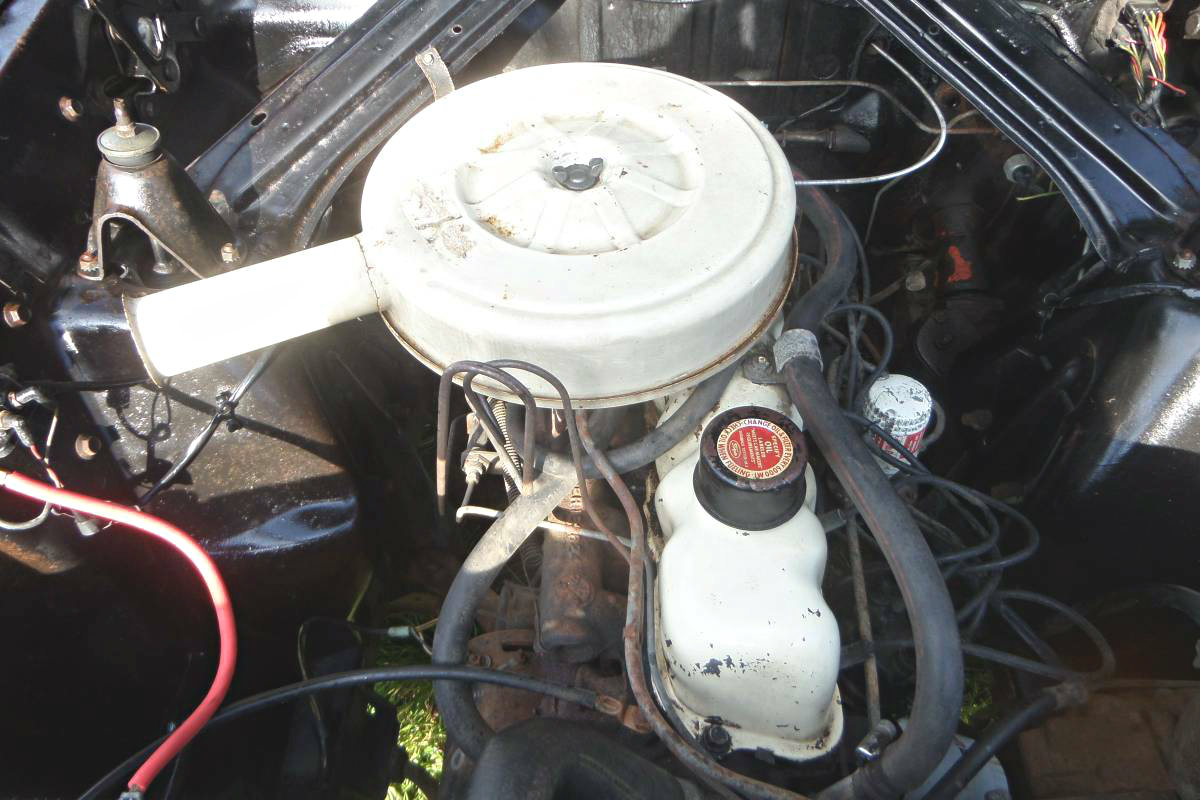
Mechanically, the Cougar would differ from the Mustang in several significant ways. As Mark McCourt spelled out in our
1967-69 Mercury Cougar Buyer’s Guide, published in the January 2004
Hemmings Muscle Machines,
no six-cylinder engine option was available, leaving consumers to
choose between a 289 V-8 topped by a two-barrel carburetor, rated at 200
horsepower; a 289 V-8 topped by a four-barrel carburetor, rated at 225
horsepower; a 390 V-8, topped by a two-barrel carburetor and rated at
280 horsepower; and a 390 V-8, topped by a four-barrel carburetor and
exhaling through a dual exhaust, rated at 320 horsepower. Transmission
choices included the standard three-speed manual, a “top loader”
four-speed manual, and a three-speed Merc-O-Matic with Select Shift,
which allowed drivers to hold first or second gear.
 The Cougar’s 289 V-8 was good for up to 225 horsepower when topped by a four-barrel carburetor. Photo by Richard Lentinello.
In
keeping with it pseudo-luxury focus, the Cougar received a revised
suspension as well, tuned more for comfort and compliance than for
handling. A performance handling package featuring stiffer springs,
heavy-duty shocks, and a larger front anti-roll bar was available for
those wanting a sportier feel, but the Cougar was also saddled with an
additional 123 pounds of sound deadening material compared to the
Mustang.
In preparation for the car’s launch, automotive
journalists of the day received press releases from towns with “Cougar”
in the name, Cougar burgers (spiced ground beef, shipped on dry ice),
Cougar crackers, Cougar wine and Cougar cookies, ensuring that no one
would forget the car’s name at its September 1966 debut. Pitched by Ford
executives as “America’s first luxury sports car at a popular price,”
the Cougar promised consumers “Untamed elegance! …an entirely new kind
of road animal from Mercury.”
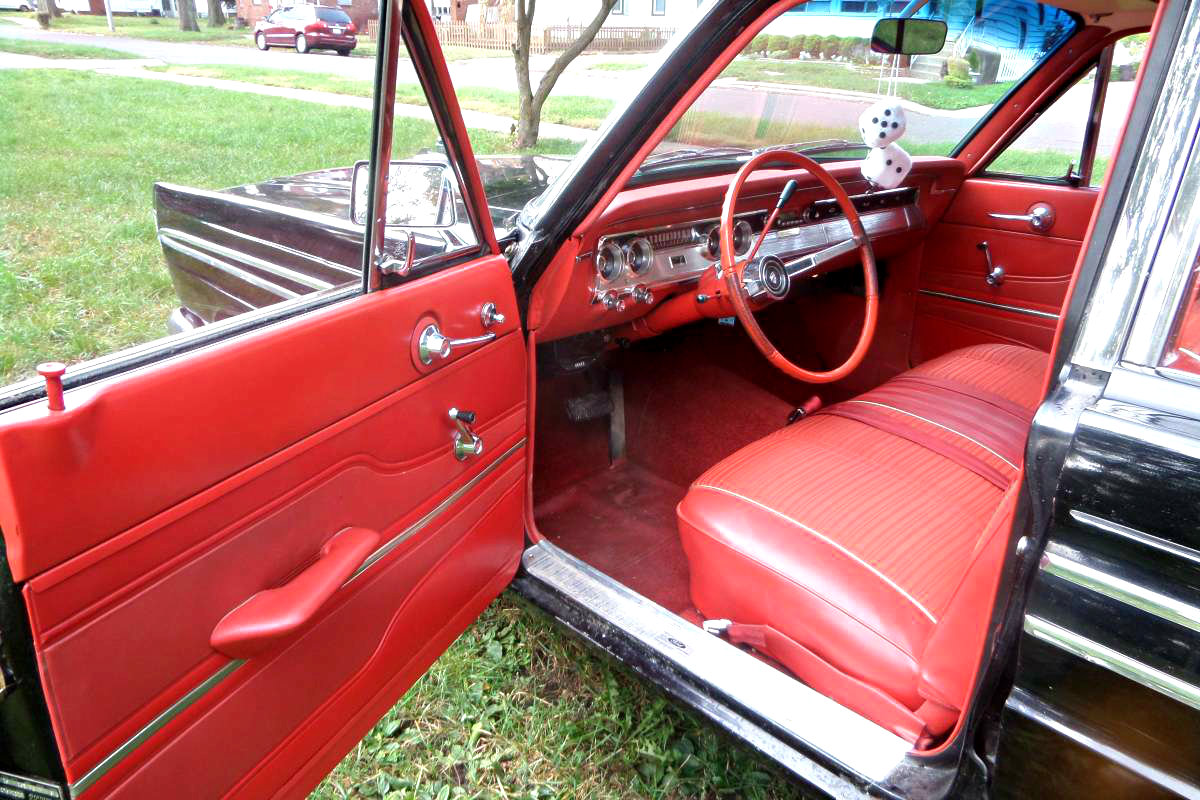
 Dan Gurney Edition interior. Photo by Richard Lentinello.
Well-equipped
even in its most basic form, the Cougar hit the market priced from
$2,851, or $350 more than a base Mustang. Opting for the more luxurious
XR-7 version brought the price of admission to $3,081, which was still a
considerable bargain compared to European luxury sports cars. In the
words of Lincoln-Mercury general manager and Ford vice president Gar
Laux, “In a nutshell, the Cougar XR-7 is the car for the man who aspires
to Aston Martin, but doesn’t have James Bond’s pocketbook.”
The
press liked it, too, with most describing the Cougar as a more refined
version of the Mustang. Motor Trend named it Car of the Year for 1967,
and perhaps to prove it was no slouch on the race track, Mercury
enlisted the services of Dan Gurney to campaign the car in the SCCA’s
Trans Am series, resulting in a Dan Gurney Special Edition Cougar XR-7.
 Dan Gurney in his Bud Moore Mercury Cougar at Kent, Washington in 1967. Photo courtesy Ford Motorsports.
In
its debut year, the Cougar sold 150,893 examples, but by 1970, the last
year of the original Mercury Cougar, just 72,343 were built. In 1971 a
new Cougar was launched, still based upon the Mustang, but by the time
the third-generation cat debuted in 1974, its basis was the larger Ford
Torino. This version would be replaced by
an even larger a
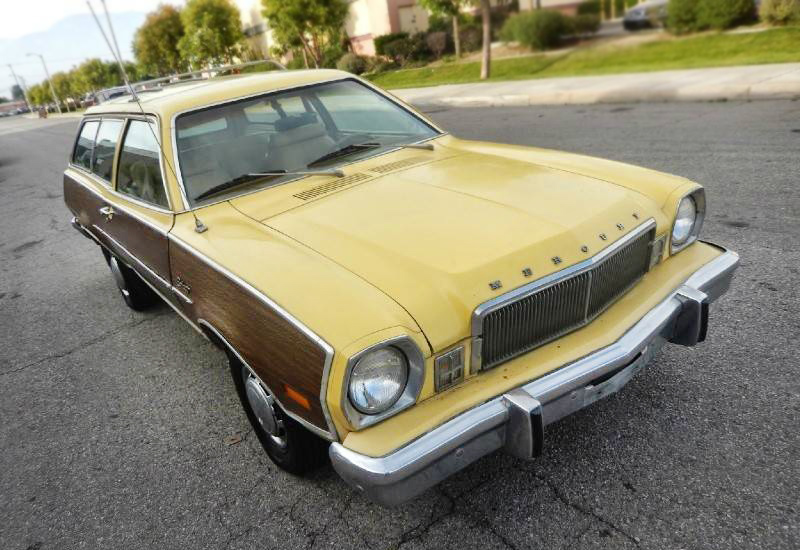
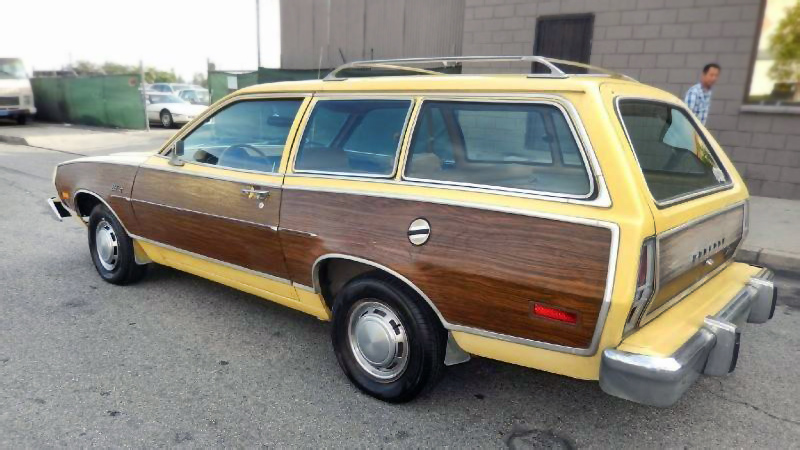
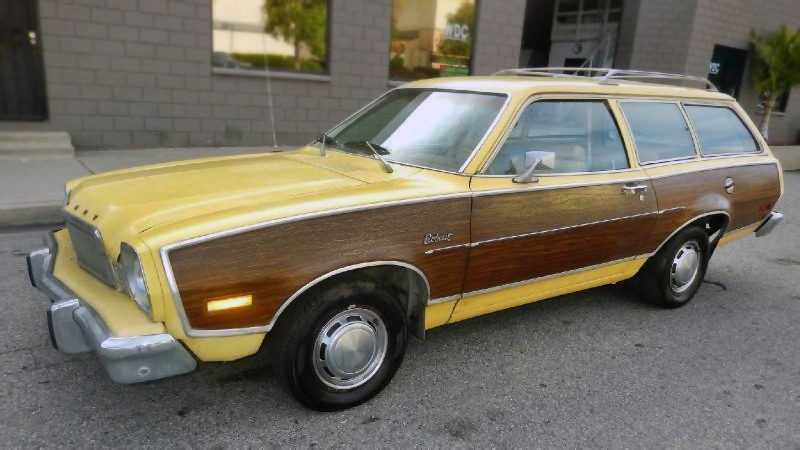
new Cougar, riding on the LTD II (formerly Torino) platform and
ultimately spawning a station wagon, available with or without fake wood
paneling, in 1977.
Three more generations of Cougars would come
and go from 1980 – 1997, but by then the car’s sales numbers were truly
dismal. In 1996, just under 39,000 examples were sold, but this would
fall further, to just over 35,000 examples, the following year. With its
MN12 platform cancelled, the Cougar appeared to have given its last
roar.
Except the brand wasn’t quite ready to give up on the name
just yet. For 1999, Mercury revived the Cougar as a sport compact built
upon the Ford Contour platform and sharing its front-engine, front-wheel
drive layout. Power options were limited to four and six-cylinder
engines, and while a sportier variant (borrowing heavily from the
Contour SVT parts bin) was discussed, the model never made it to
production. After the first-year novelty wore off, consumers weren’t
drawn to reborn Cougar, and sales fell from 88,288 units in 1999 to just
over 25,000 examples in 2001, its penultimate year. With little
fanfare, the Cougar nameplate disappeared from the American landscape at
the end of the 2002 model year.
Source: blog.hemmings.com